

The seven letters invite comparison. Phrases recur, promises echo and every address calls hearers to listen. Yet comparison can become flattening if one chart replaces the texture of seven different communities.
A good method begins with each letter as a whole, then compares the sequence, then returns to the local city with historical questions. It also distinguishes what the text states from what archaeology, tradition or modern interpretation may contribute.
Read each address aloud as one movement
Notice the description of Christ, the statement of knowledge, praise or correction, the imperative and the promise. Not every element appears in the same order or with the same emotional weight.
Reading the whole address protects famous phrases from becoming slogans. Laodicea is more than ‘lukewarm,’ Sardis more than ‘wake up,’ and Ephesus more than ‘first love.’
Mark repeated language across all seven
The call to hear what the Spirit says to the churches moves the reader beyond one city. The promises to the one who conquers connect endurance with the larger symbolic world of Revelation.
Repeated form does not mean identical diagnosis. Smyrna receives no rebuke like Laodicea; Philadelphia’s limited strength is not Sardis’s reputation without life.
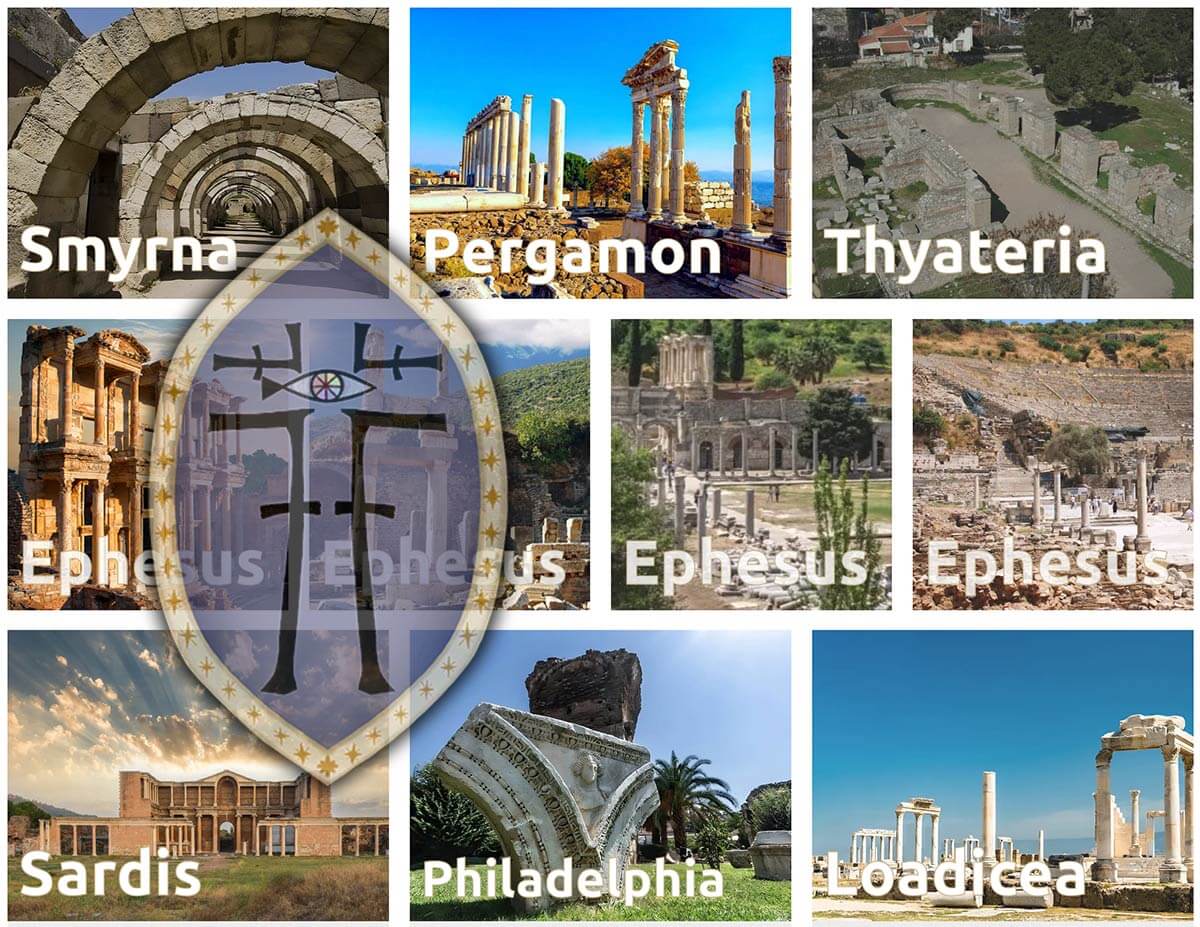
Use local history as illumination, not a master key
Pergamum’s imperial landscape, Thyatira’s trade associations, Sardis’s remembered vulnerability and Laodicea’s water system can sharpen interpretation. None should be announced as the single code that makes every line obvious.
Where historians debate a connection, the debate belongs in the explanation. An interpretation can be plausible and valuable without being certain.
Leave room for the group’s own theological voice
Christian traditions place Revelation within different prophetic and ecclesial frameworks. A travel company should not imitate pastoral authority or declare one denominational system for every guest.
The guide’s responsible role is to explain the text’s setting, evidence and major interpretive questions. Pastors and group leaders can shape teaching, worship and application.
For reflectionHistorical care does not weaken spiritual reading. It slows us down long enough to hear both the shared call and the particular word addressed to each community.