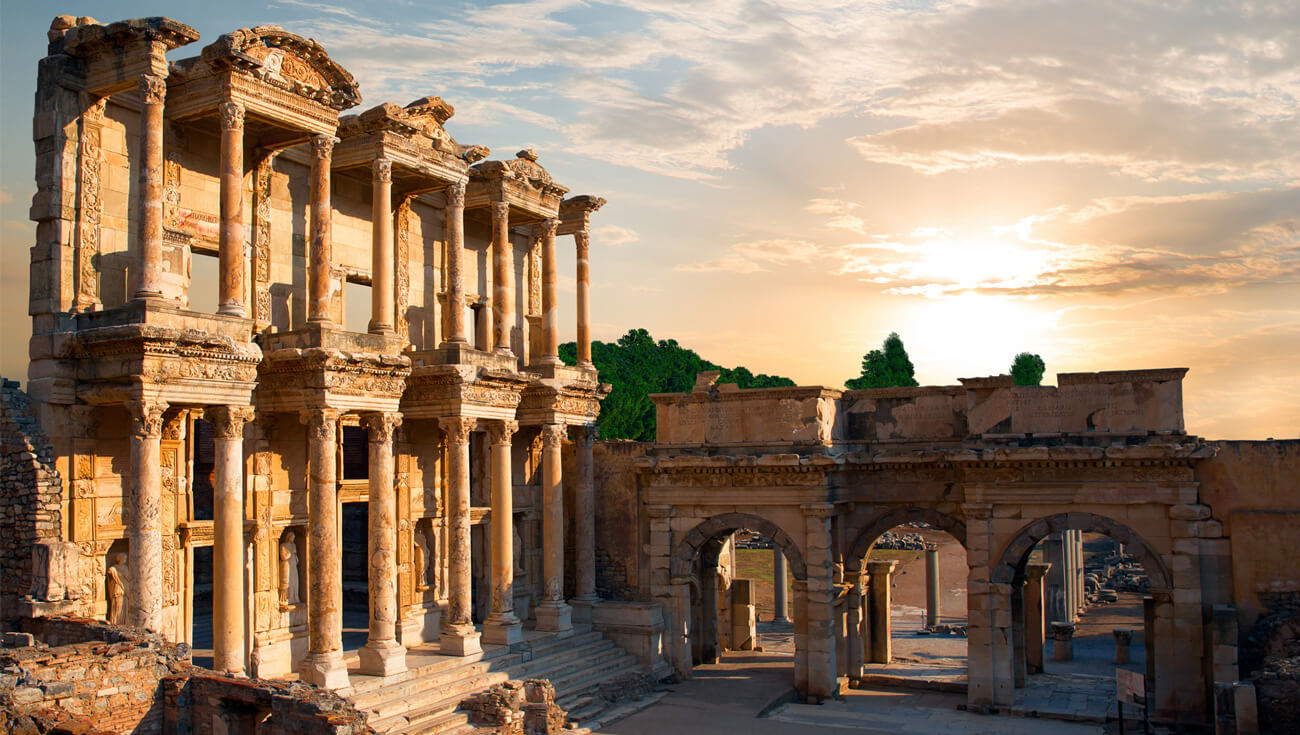
A traveler arriving in Ephesus meets several Johns at once. There is John on Patmos, who addresses seven churches in the Roman province of Asia. There is the beloved disciple of the Fourth Gospel. There is the elder remembered by early Christian writers. And there is the John whom generations of pilgrims associated so closely with Ephesus that a great basilica rose over the place honored as his tomb.
Christian tradition has often brought these figures together. Modern scholarship asks more cautious questions about authorship and identity. A thoughtful journey does not have to choose between devotion and historical care. It can listen to Scripture, early testimony, archaeology and later memory without pretending that they all say exactly the same thing.
Begin with what Revelation actually gives us
The opening of Revelation places John on the island of Patmos and presents him as a fellow participant in suffering, kingdom and patient endurance. He is instructed to write what he sees and send it to Ephesus, Smyrna, Pergamon, Thyatira, Sardis, Philadelphia and Laodicea. These communities are not imaginary symbols floating outside history. They belong to named cities connected by the roads and institutions of Roman Asia.
The order is meaningful. From Ephesus the sequence turns north toward Smyrna and Pergamon, then bends inland through Thyatira, Sardis and Philadelphia before reaching Laodicea. It resembles a practical communication circuit. Reading the letters beside this landscape reminds us that Revelation was received by communities who knew imperial ceremonies, local cults, earthquakes, trade networks, social pressure and the daily cost of belonging.
Why Ephesus became central to the memory of John
The New Testament does not contain a sentence saying that John wrote the Fourth Gospel in Ephesus. The connection comes through the way early Christians remembered the apostolic generation. Writers of the second and early third centuries associated John’s later life with Asia, especially Ephesus. Eusebius preserves several of these traditions, though he also reveals how complicated the ancient discussion about different figures named John could be.
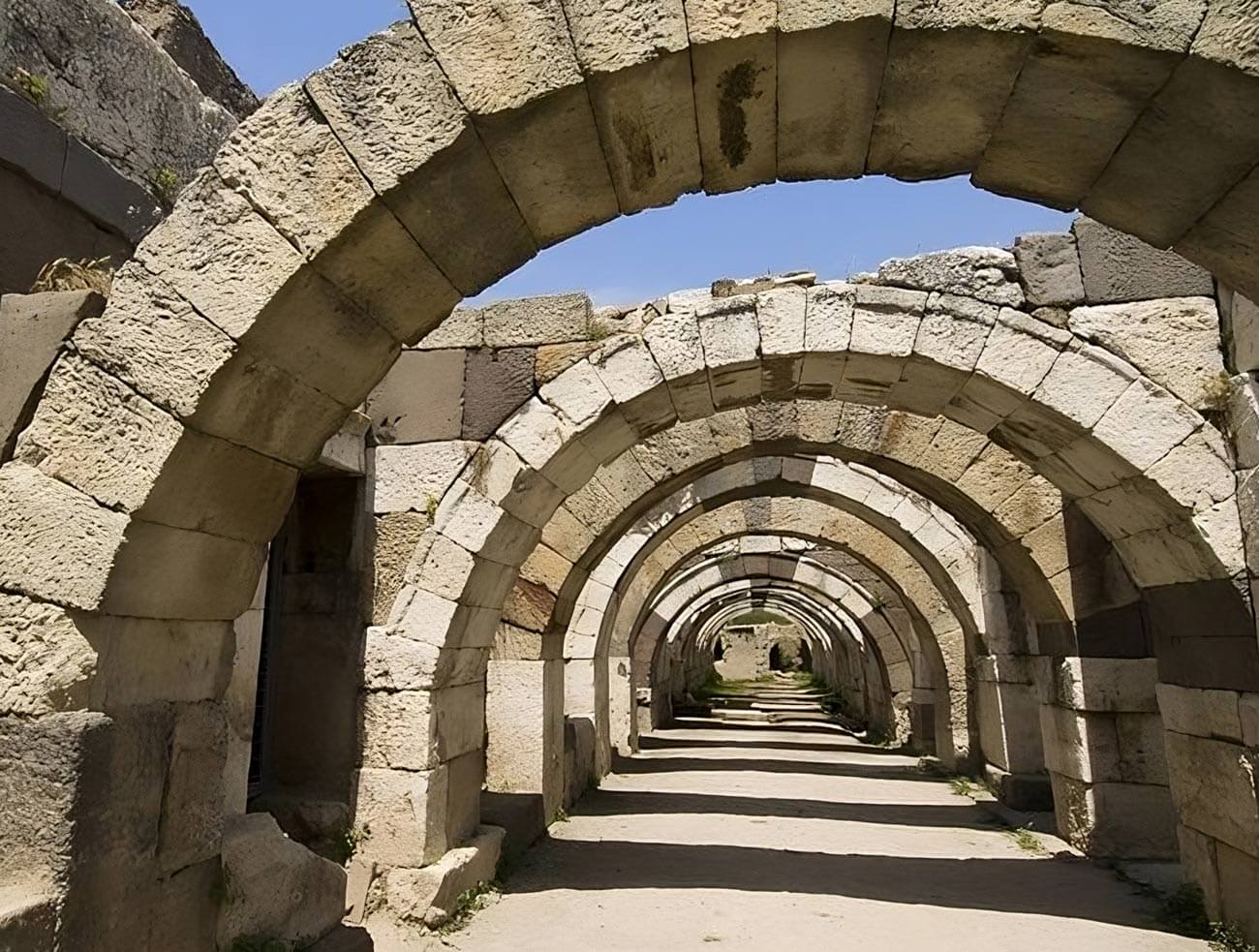
Ephesus was a plausible center for an influential Christian teacher. It was a major port city, an administrative and commercial hub, and a meeting place for people from across the province. The city already appears prominently in the story of Paul. By the second century, Christian communities across western Anatolia were exchanging letters, receiving traveling teachers and remembering martyrs. Ephesus stood naturally within that network.
The Basilica of St. John is a monument to memory
On Ayasuluk Hill, above the later town of Selçuk, the remains of the Basilica of St. John preserve a powerful chapter in that memory. The monumental church visible today belongs principally to the reign of Justinian in the sixth century, built over an earlier sacred complex and the place venerated as John’s burial site. It is not the church building addressed in Revelation, and it should never be presented as such.
Its importance lies elsewhere. The basilica shows how a remembered apostolic presence shaped pilgrimage, architecture and local identity long after Roman Ephesus had begun to change. Standing there allows a group to ask how Christian memory takes physical form: first in testimony and worship, then in a shrine, and eventually in an imperial church visited by generations of believers.
Reading the seven letters with the city in view
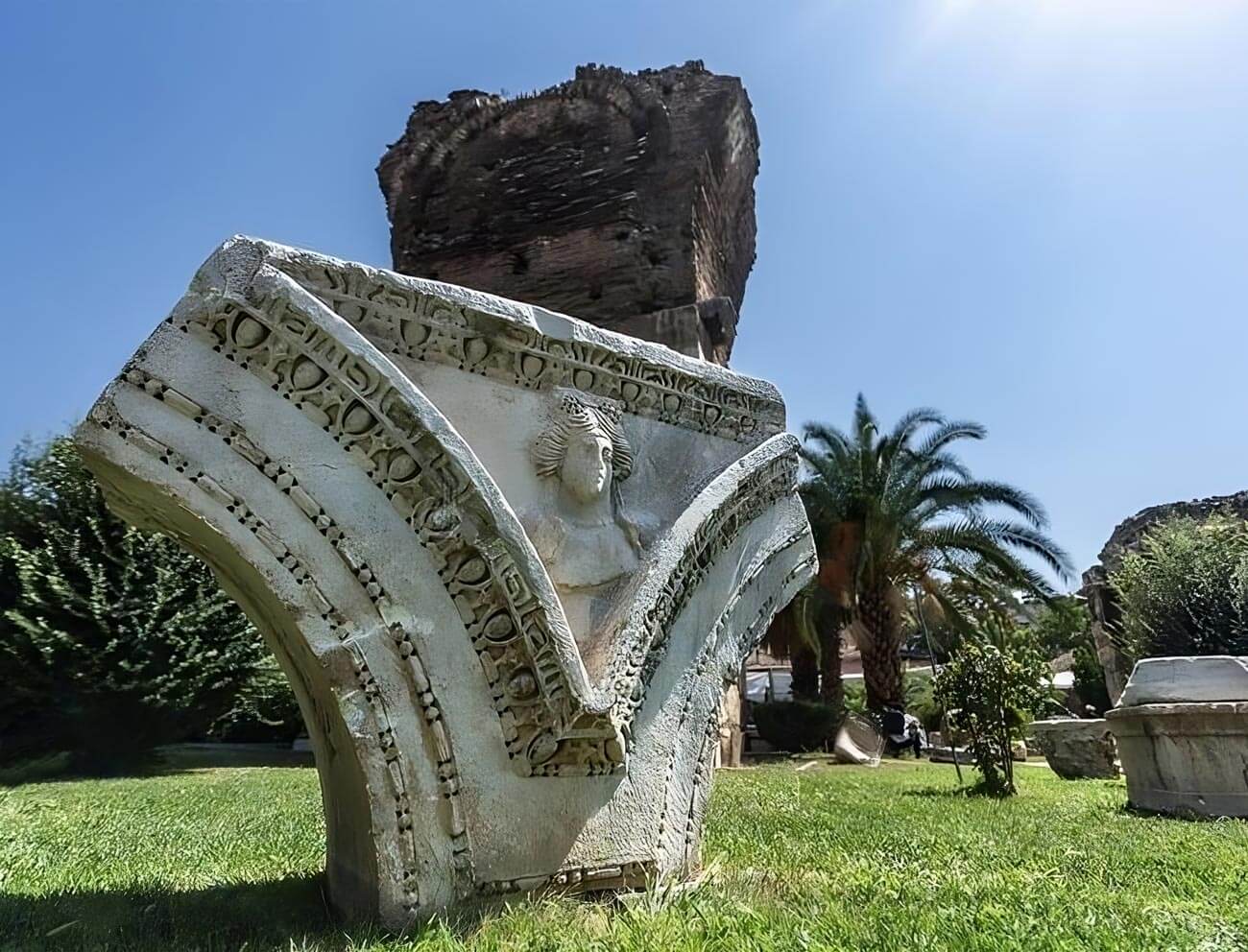
At Ephesus, the letter’s praise for endurance and its warning about lost first love can be heard against the scale of a city proud of its status and sacred traditions. At Pergamon, the dramatic acropolis, imperial monuments and varied religious landscape help explain why allegiance was not merely private. At Sardis, fortification, wealth and repeated moments of sudden defeat give historical resonance to the language of wakefulness—without reducing the letter to one archaeological anecdote.
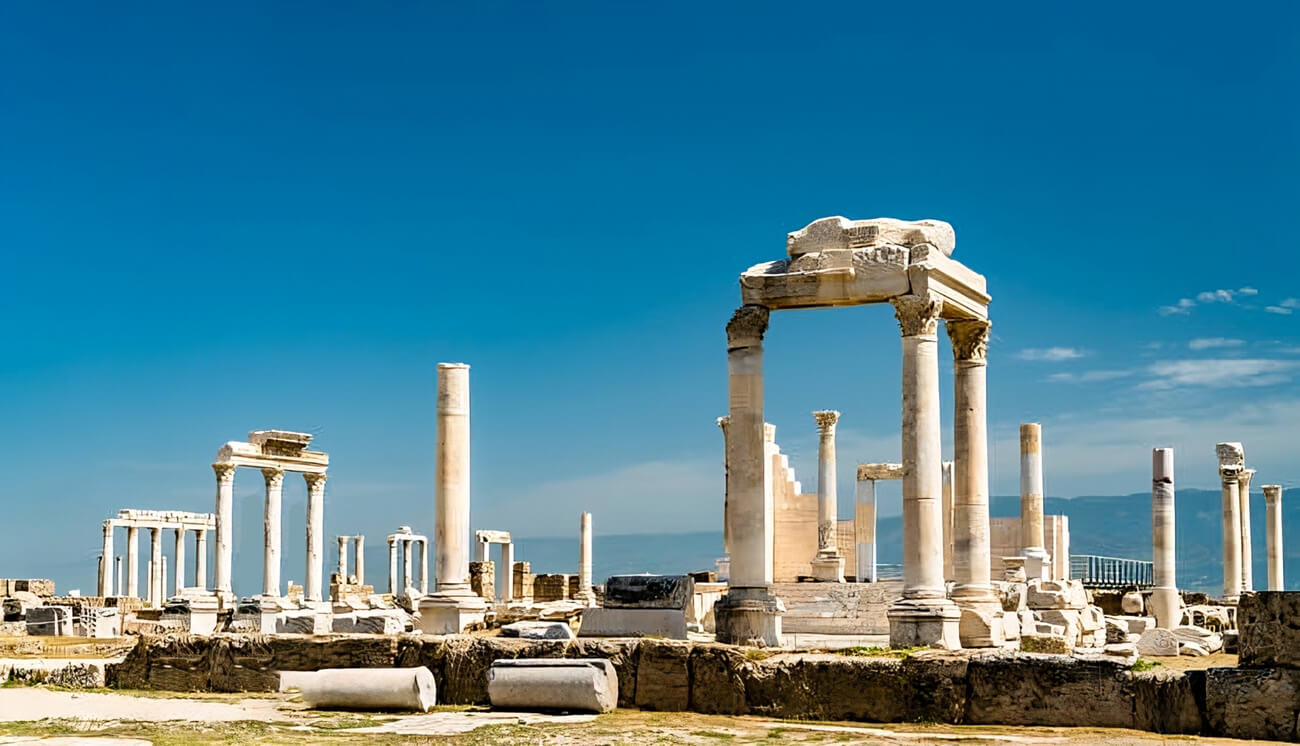
Laodicea offers another example. Its prosperity, regional medical associations and dependence on water carried from outside the city have often been used to explain every phrase of Revelation 3. Some connections are illuminating; others are repeated too confidently. The guide’s task is to distinguish an attractive sermon illustration from what the evidence can securely support.
John’s world was Jewish, Roman and deeply local
Revelation draws heavily on Israel’s Scriptures. Its visions speak through prophetic language, worship scenes, exodus imagery and the hope of a renewed creation. At the same time, the seven churches lived within cities whose public life was shaped by Rome. Imperial benefaction, festivals, trade associations and civic religion were woven into ordinary social life. The challenge was not simply whether a believer would enter a temple; it was how loyalty to Christ affected work, reputation, meals, family and public belonging.
The letters are therefore both universal and local. Their calls to endurance, discernment, repentance and faithful witness have traveled across centuries. Yet they first reached particular people. Visiting the cities protects interpretation from becoming vague. Marble streets, city gates, workshops, water lines and assembly spaces return the text to the complicated human world in which it was first heard.
What archaeology can—and cannot—tell us
Archaeology can reconstruct urban development, identify buildings, recover inscriptions, study foodways and trace patterns of religious and economic life. It can show that a city was wealthy, vulnerable to earthquakes or connected to a broad trade network. It can illuminate the environment in which a Christian community lived.
Archaeology cannot excavate the spiritual condition of a congregation. It rarely points to the exact house in which a first-century believer worshiped. A responsible journey resists invented certainty: no guide should point to a convenient ruin and declare that John preached from that precise stone without evidence. The absence of such claims does not make a visit less meaningful. It makes the encounter more honest.
Traveling with John means learning to hold layers together
A journey through western Türkiye follows several timelines at once. The first is the world of the New Testament. The second is the memory preserved by early Christian authors. The third is the long life of pilgrimage, church building and local tradition. The fourth is modern archaeological research, which continues to revise what we know about the cities themselves.
John matters to this geography because the texts and memories associated with him helped Christians understand the churches of Asia as a connected witness. The most rewarding visit is not the one that forces every layer into a single answer. It is the one that lets the layers speak clearly—and allows faith, history and place to deepen one another.
For reflectionFor a church group, the most useful question may not be ‘Can every tradition be proved?’ but ‘How did generations of Christians remember faithful witness in this landscape—and what does that memory ask of us?’