On a modern map, the Seven Churches of Revelation can look like seven separate pins. On the ground, they form a connected arc through western Türkiye. The cities belonged to the Roman province of Asia and participated in overlapping networks of administration, trade, religion and communication.
A good journey respects that connection. It also respects the limits of modern travelers. Flight schedules, hotel locations, archaeological opening hours, walking ability and the time needed for teaching must all be balanced. The goal is not to imitate an ancient courier at any cost. It is to follow the landscape without wasting the group’s time or emptying the experience of meaning.
The sequence begins at Ephesus
Revelation names Ephesus first, then Smyrna and Pergamon, before turning inland toward Thyatira, Sardis, Philadelphia and Laodicea. Scholars have long observed that this order can be followed as a broad road circuit. Ephesus was a natural point of entry: a major city connected to maritime and inland routes.
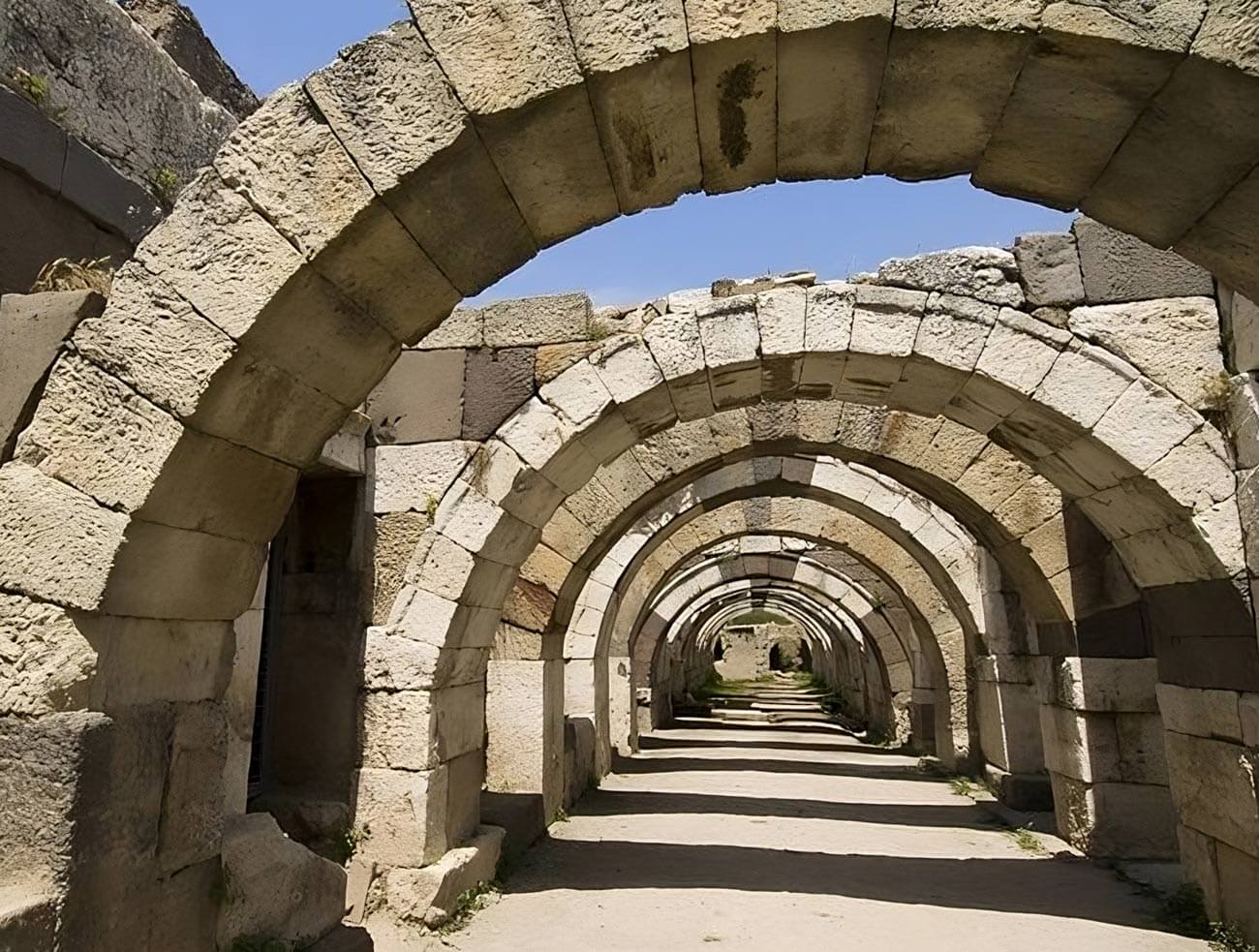
Most present-day groups, however, arrive by air at İzmir Adnan Menderes Airport. That changes the most efficient starting point. Smyrna is within modern İzmir, so the ancient agora can often be visited on arrival day when flight times permit. The route can then move north to Pergamon before turning southeast. This avoids repeated long returns to the same hotel and keeps each day moving toward the next city.
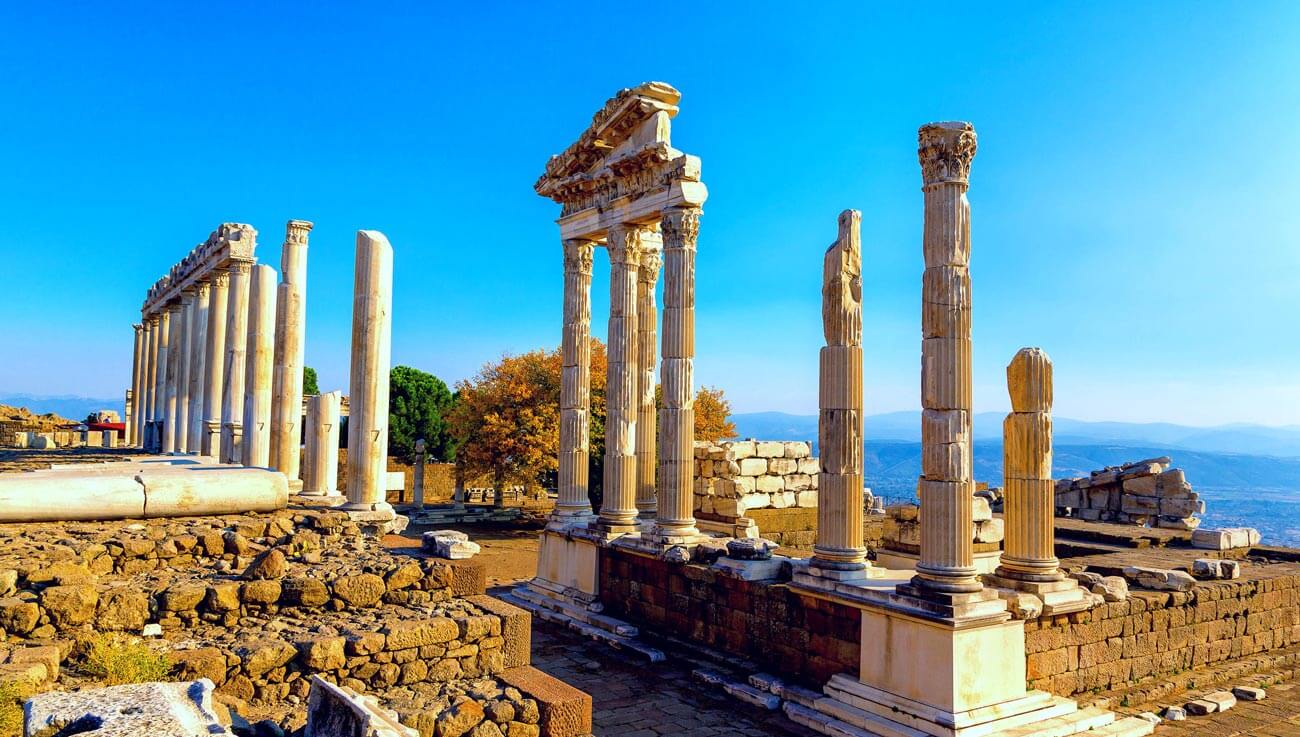
Pergamon deserves more than a hurried photograph
Pergamon rises above the modern town of Bergama. Its acropolis is visually dramatic, but the letter in Revelation should not be reduced to a single claim that one surviving foundation is unquestionably ‘Satan’s throne.’ The phrase has generated several interpretations, including the city’s imperial role, its elevated sacred landscape and particular monuments. A specialist guide should explain the possibilities rather than turn one theory into certainty.
The Red Basilica below the acropolis adds another layer. Built as a monumental Roman sanctuary and later adapted for Christian use, it embodies religious transformation across centuries. Groups interested in that transition may include it; others with limited time may focus on the acropolis. The itinerary should respond to the group’s questions, not merely accumulate stops.
Thyatira teaches the value of a small site
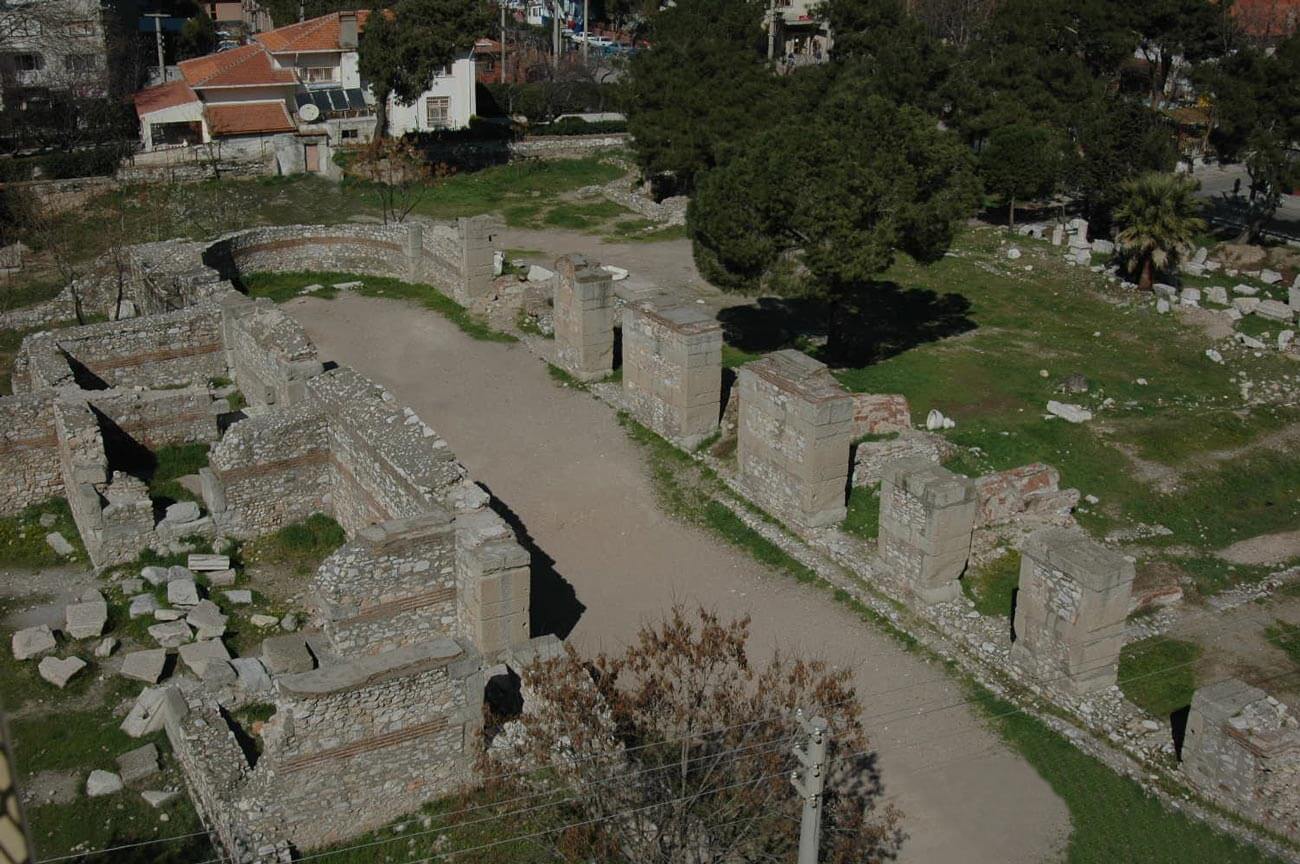
Thyatira, within modern Akhisar, is modest compared with Ephesus or Pergamon. That is precisely why guiding matters. Without context, a visitor may see only a fenced area of columns and walls. With historical explanation, the city becomes a conversation about trade, craft associations, social meals and the challenges addressed in Revelation.
The New Testament identifies Lydia of Philippi as a seller of purple cloth from Thyatira. The reference does not prove that every visible ruin is connected with her, but it links the city to the movement of people and goods across the Aegean. Small archaeological remains can support a large story when the claims stay proportionate to the evidence.
Sardis opens several histories at once
Sardis was the capital of ancient Lydia and remained an important city under Persian, Hellenistic and Roman rule. Its landscape includes the Temple of Artemis, a monumental bath-gymnasium complex and a richly decorated late Roman synagogue. These remains do not all belong to the same century as Revelation, but together they reveal the city’s long life and religious diversity.
The language of wakefulness in the letter has often been connected with stories of the acropolis being captured after defenders failed to guard difficult approaches. The parallel is memorable, but it should be presented as historical resonance rather than the only possible meaning. The letter addressed a community, not a military textbook.
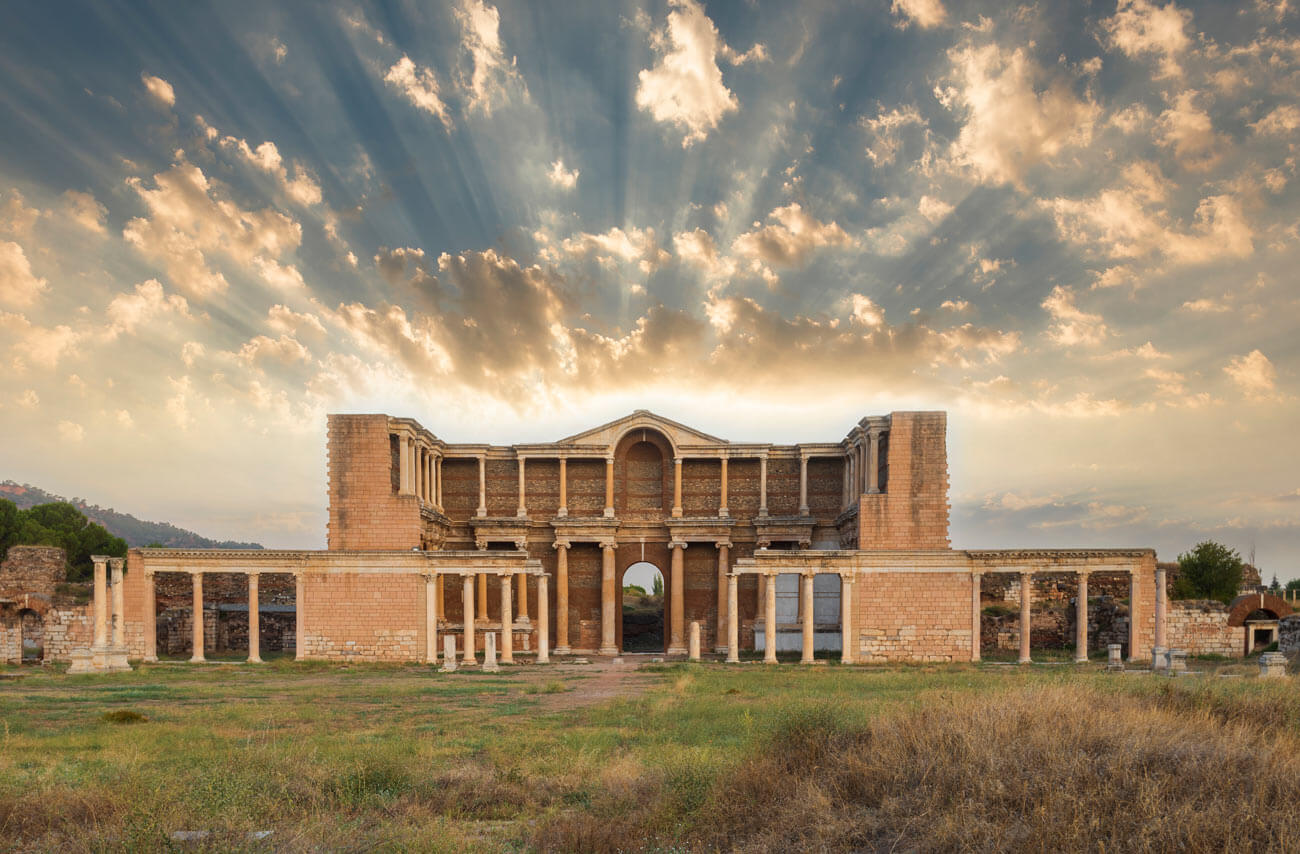
Philadelphia is about continuity as much as remains
Philadelphia lies within Alaşehir, a living town repeatedly rebuilt after earthquakes. Large brick piers and arches preserve the memory of a later church, while much of the ancient city remains beneath modern settlement. The letter’s language of an open door, endurance and becoming a pillar gains particular emotional power here, but the surviving church structure dates centuries later.
This is another place where an honest guide improves the experience. Instead of claiming that the visible walls are the first-century congregation, the visit can explore continuity: how a Christian presence was remembered, rebuilt and expressed through changing architecture in an unstable landscape.
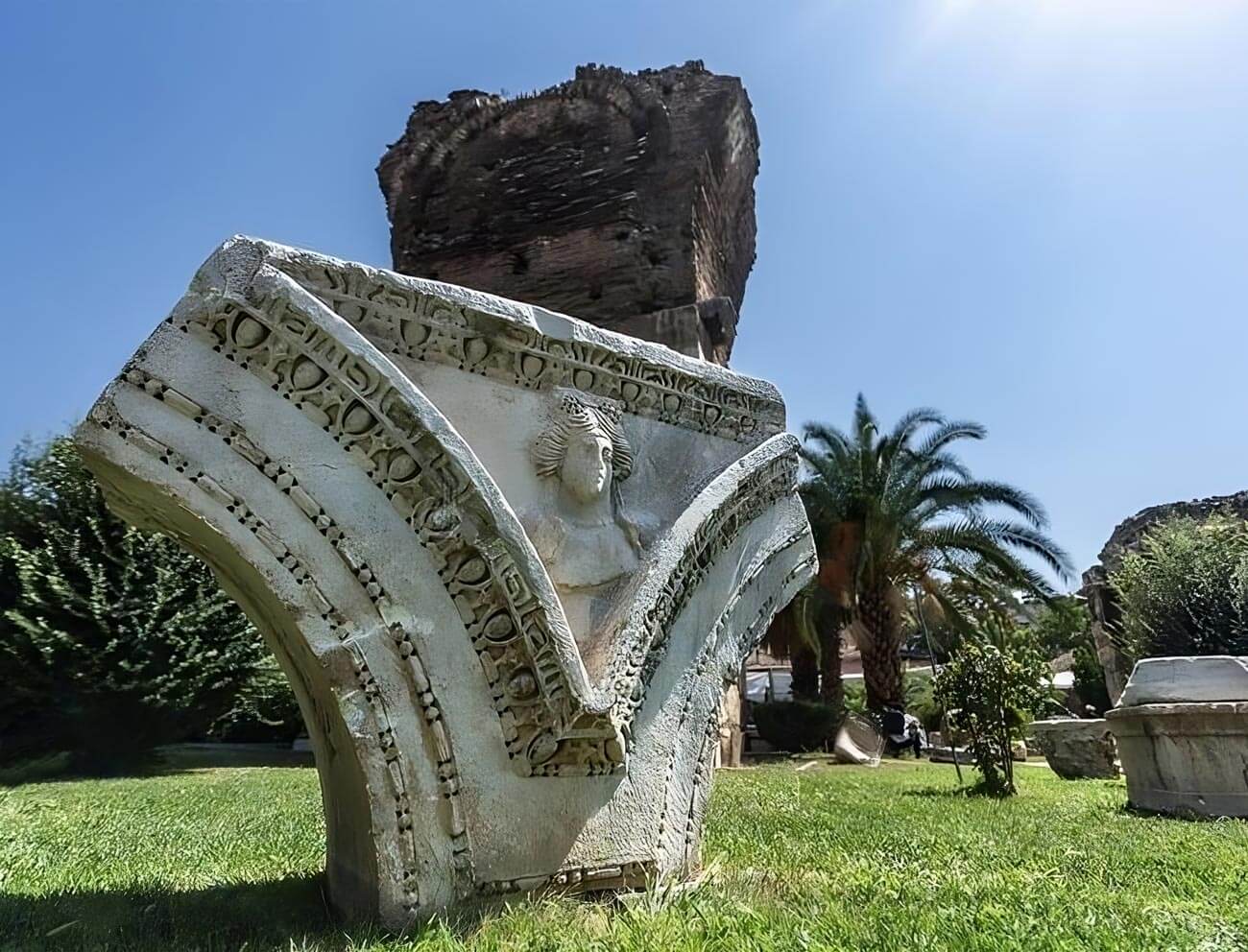
Laodicea and the Lycus Valley
Laodicea’s broad streets, public buildings, churches and water infrastructure make it one of the route’s most instructive sites. Together with nearby Hierapolis and Colossae, it belonged to the Lycus Valley network known from the New Testament. The letter’s language about wealth and self-sufficiency fits a city with substantial resources, though every famous phrase should still be handled carefully.
The city’s water arrived through an engineered system and left visible mineral deposits. Popular teaching often draws a straight line between that system and the description of being lukewarm. The regional context is suggestive, but the precise historical reconstruction remains debated. The deeper point is secure: the letter uses the community’s own world to challenge its self-understanding.
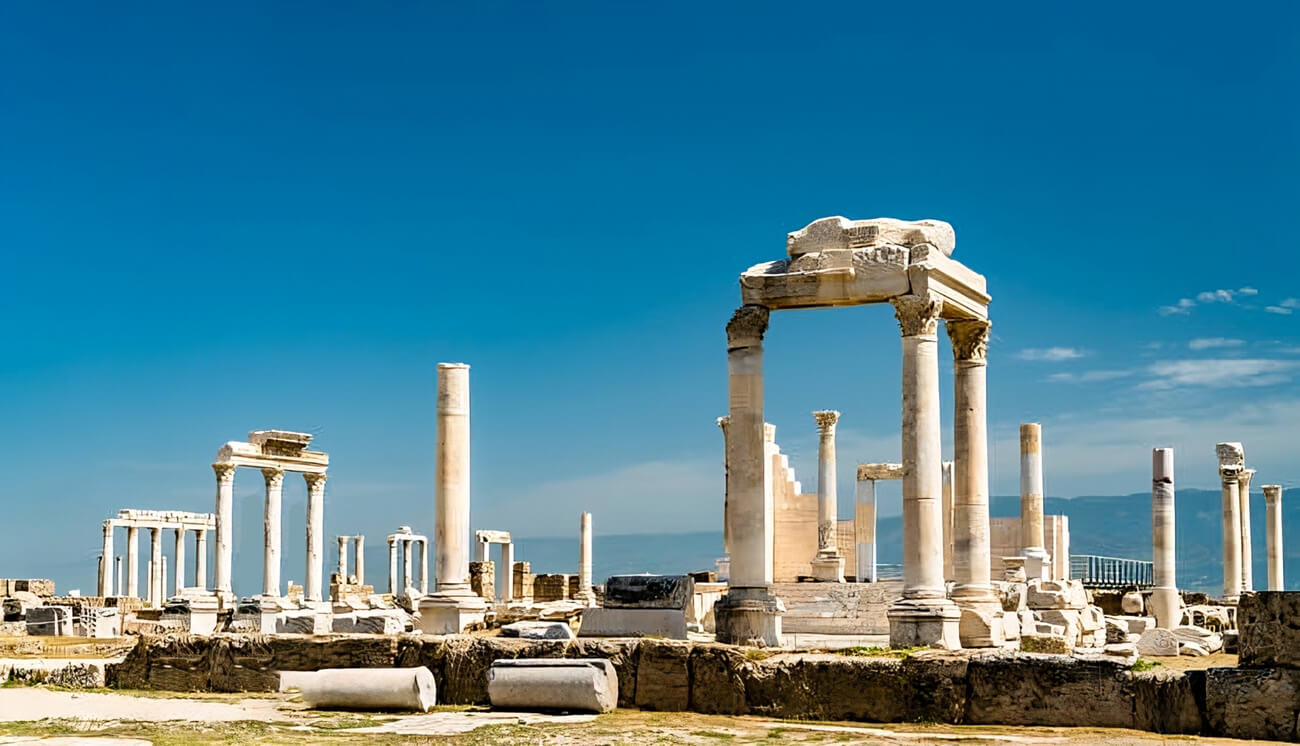
Why Hierapolis belongs in a five-day journey
Hierapolis is not one of the seven churches named in Revelation, yet it belongs naturally beside Laodicea. Colossians mentions believers in the Lycus Valley, and early Christian tradition connects Hierapolis with Philip and Papias. The city’s necropolis, thermal landscape, theater and later Christian buildings require time to understand.
A four-day route can cover the core geography, but adding Hierapolis without adding time often turns the day into a race. A five-day program allows the group to explore the valley, rest properly and approach Ephesus with energy. For older travelers, that difference is not a luxury; it determines how much of the journey they can actually receive.
Ephesus is the culmination, not merely the final stop
Ending at Ephesus brings several stories together: Revelation’s first letter, Paul’s extended ministry, traditions associated with John and later Christian history. A full visit may include the main city, Terrace Houses, the Basilica of St. John and—when the group wishes—the House of the Virgin Mary. These places belong to different periods and kinds of evidence, so they should be interpreted distinctly.
The route then returns naturally toward İzmir Airport or connects with a longer Türkiye journey. Istanbul and Nicaea, Cappadocia, Paul’s landscapes around Tarsus and Konya, Pisidian Antioch, Alexandria Troas, Miletus and Perge can extend the story. The essential principle remains the same: every addition should deepen the journey rather than scatter it.
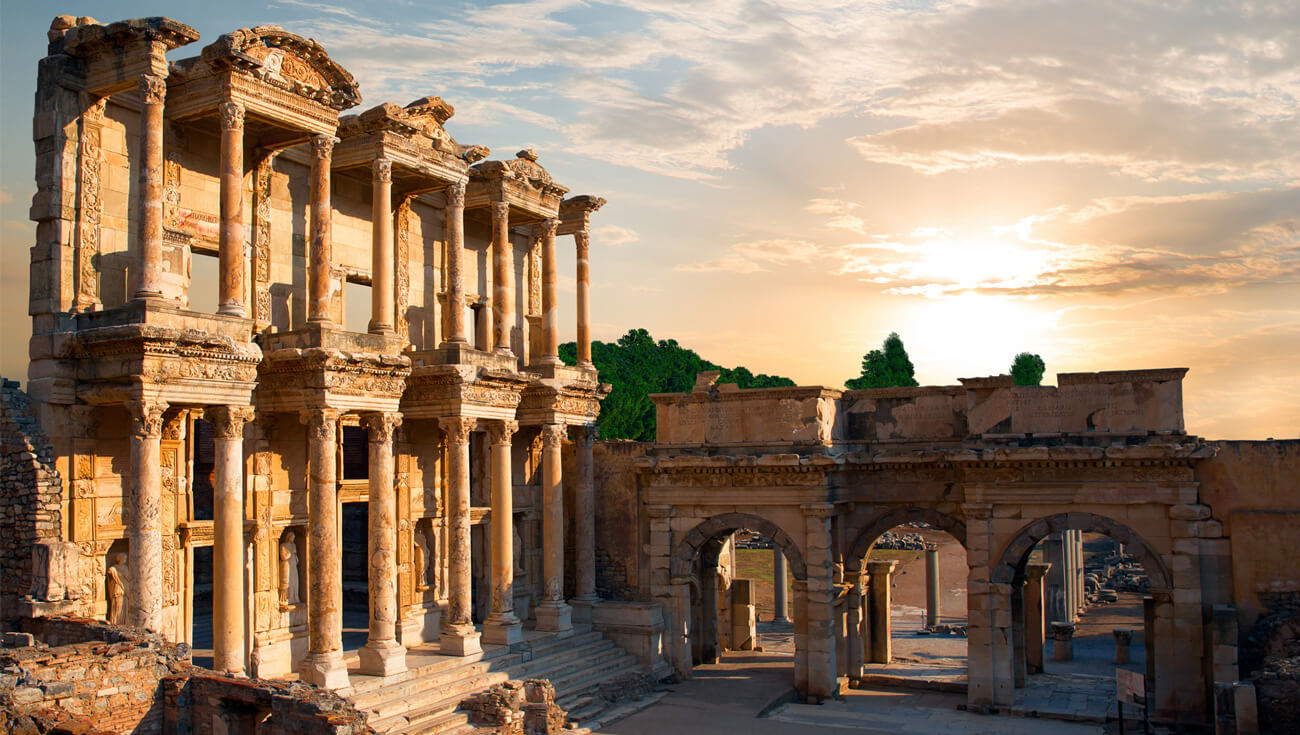
Four days or five? The honest answer
Four days can form an efficient essential journey when flights cooperate and the group is comfortable with a steady pace. Five days is our preferred form because it creates room for Hierapolis, St. John’s Basilica, questions, worship and ordinary human needs. A three-day express journey is possible only by accepting real compromises.
The best program is therefore not automatically the longest. It is the one that matches the group’s mobility, teaching priorities, available flights and wider Türkiye plans. Route design is an act of hospitality: the schedule should serve the people, not ask the people to serve the schedule.
For reflectionA pilgrimage becomes memorable when every road has a reason. The journey should allow the seven letters to remain distinct while revealing the geography and shared world that connect them.