Scripture
A vision toward Macedonia—and a return journey
Acts 16 brings Paul’s party to Troas before the crossing toward Macedonia. The narrative presents a vision and a decisive change of direction, linking Anatolia with the mission’s movement into the Aegean world.
Acts 20 returns to Troas and tells the story of Eutychus during a nighttime gathering. The account identifies a community and an upper room, but no excavated building at the site can securely be called that meeting place.
Archaeology
A planned city, monumental baths and a port landscape
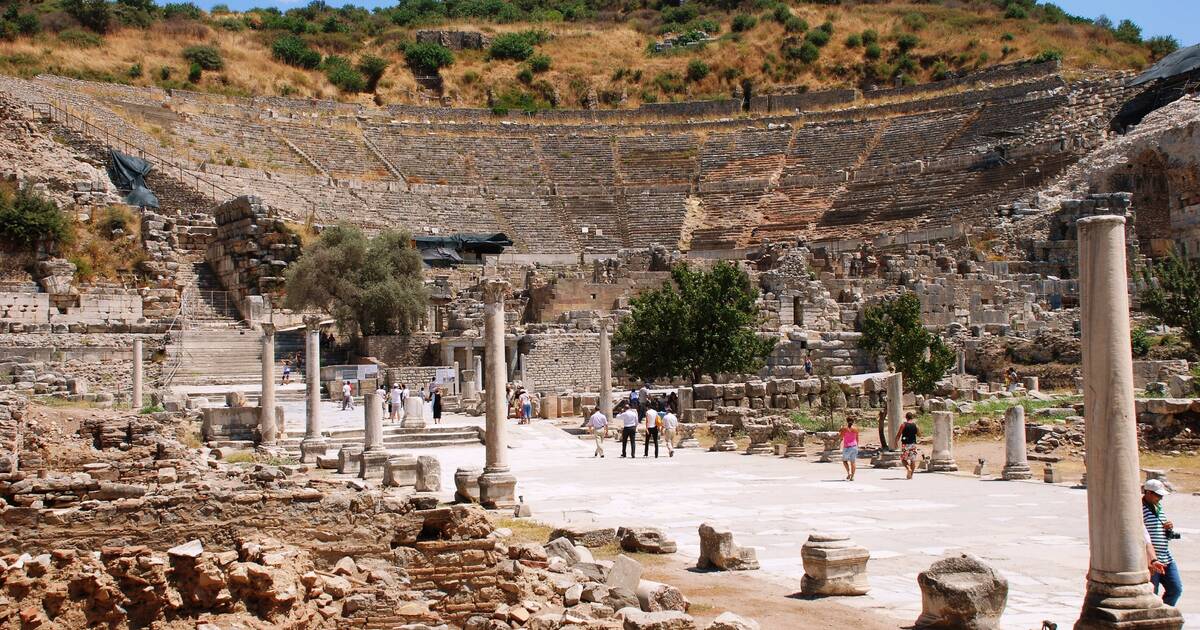
Alexandria Troas occupied a very large walled area in the Troad. The visible remains include monumental Roman structures, streets, water infrastructure and the great complex associated with Herodes Atticus; the ancient harbor belongs to the city’s wider maritime story.
The scale of the ruins helps explain why Troas could function as an important point of departure. Archaeology reconstructs the city and its movement networks, not the precise room or shoreline moment described in a sermon.
Journey design
Troas belongs to a northern route, not every Seven Churches program
Alexandria Troas fits naturally with the Troad, Troy, Assos, Çanakkale or a route continuing toward the Marmara region. It requires a substantial northward extension from the core Seven Churches circuit.
The visit is strongest when the group has time to connect Acts 16 and 20 with the actual scale of the city rather than adding Troas as a hurried name on a long transfer day.
- Acts 16 and the Macedonian call
- Acts 20 and Eutychus
- Monumental Roman city
- Aegean travel and route logic
Sources & further reading