Scripture
A life connected to Anatolia before the journeys began
Acts identifies Paul as a Jew from Tarsus in Cilicia and a Roman citizen. His later movements through Anatolia are narrated selectively, so the map must be built from several passages rather than from a modern itinerary imposed on the text.
Acts 13–20 connects Paul with cities and regions including Pisidian Antioch, Iconium, Lystra, Derbe, Phrygia, Galatia, Troas, Miletus and Ephesus. The letters add coworkers and relationships that show a network larger than one traveler.
Ephesus
Sustained teaching in a provincial capital
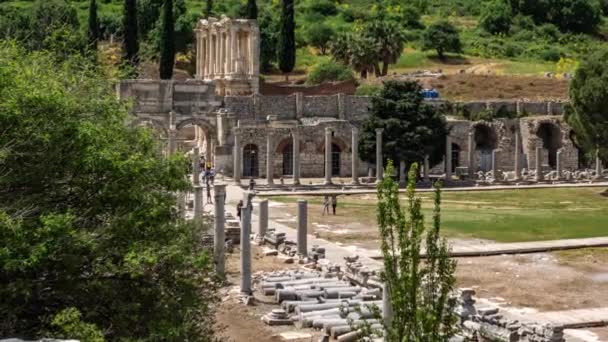
Acts describes an unusually long Ephesian ministry, discussion in the hall of Tyrannus and a conflict in which devotion to Artemis, civic identity and artisan livelihoods meet. No excavated room can be securely labeled as Paul’s lecture hall.
The city’s harbor, roads and status help explain how teaching in Ephesus could influence the wider province. The great theater makes the scale of public life visible, even though its surviving fabric includes phases beyond Paul’s time.
Across Anatolia
Some sites are monumental; others are landscapes of memory
Pisidian Antioch preserves an important Roman colonial setting for Acts 13. Tarsus remains a living city where the ancient urban fabric is fragmentary. Alexandria Troas and Miletus connect Paul’s story to Aegean travel and farewell.
A responsible itinerary explains these differences before travel. A traveler should know whether a place offers extensive excavations, a focused site, an unexcavated mound or a modern city carrying an ancient name.
- Read Acts 13–20 as a connected sequence
- Keep modern travel order distinct from the narrative order
- Treat disputed identifications with caution
- Link each stop to the group’s real teaching purpose
Journey design
Follow Paul without turning the route into a checklist
Pauline travel across Türkiye can require long distances. The strongest program chooses a coherent regional focus or allows enough days to connect regions without exhausting the group.
For many travelers, the Seven Churches and Ephesus provide a central western framework; Istanbul, Cappadocia, Tarsus or Pisidian Antioch can be added when time and purpose justify the movement.
Sources & further reading