Scriptural region
A community named beside Laodicea and Colossae
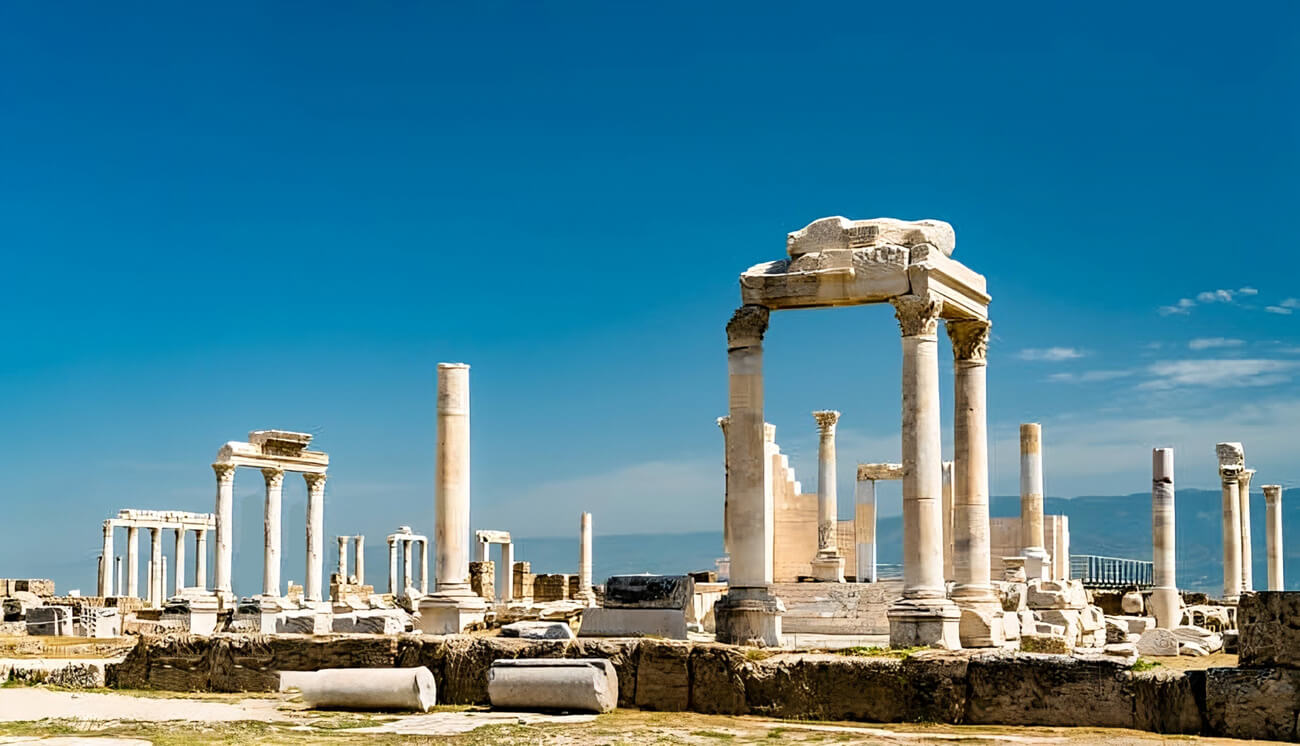
Colossians refers to concern for believers in Laodicea and Hierapolis, placing the three communities within a connected regional world. The text does not describe the monumental remains visible today.
The geography is valuable: the cities can be understood together rather than as isolated pins.
Early tradition
Which Philip? Ancient sources are not perfectly simple
Later Christian memory connected Philip with Hierapolis. Ancient writers sometimes distinguish Philip the Apostle from Philip the Evangelist and sometimes transmit traditions that are difficult to reconcile.
A responsible page names the ambiguity instead of choosing the most dramatic version without qualification. Papias, a bishop associated with Hierapolis, is also known largely through fragments preserved by later writers.
Archaeology
A city of thermal landscape, death and pilgrimage
Hierapolis preserves a vast necropolis, theater, baths, streets and later Christian monuments. The thermal landscape shaped the city across centuries.
Its Christian remains belong to later periods than the New Testament references, but they reveal how pilgrimage and memory developed around the city.
- Read Hierapolis with Laodicea and Colossae
- Distinguish the two Philips in discussion
- Treat Papias through preserved fragments
- Allow time for the site’s scale and terrain
Sources & further reading