Scripture
The letter and its recurring themes
The address in Revelation 3:14–22 speaks to a Christian community within Laodicea. It is a letter to people, not a description of a surviving church building.
- Lukewarmness
- Material confidence and spiritual need
- Counsel to receive true wealth, clothing and sight
- Invitation, discipline and restored fellowship
Read the complete passage in context before building an interpretation from one phrase.
Historical setting
The city behind the address
Laodicea prospered in the Lycus Valley and was connected with regional commerce, textiles and medical associations. Ancient evidence supports the picture of a resourceful city, though popular summaries can overstate details.
The city belonged to a close regional relationship with Hierapolis and Colossae, both named in Colossians.
Archaeological evidence
What the remains can tell us
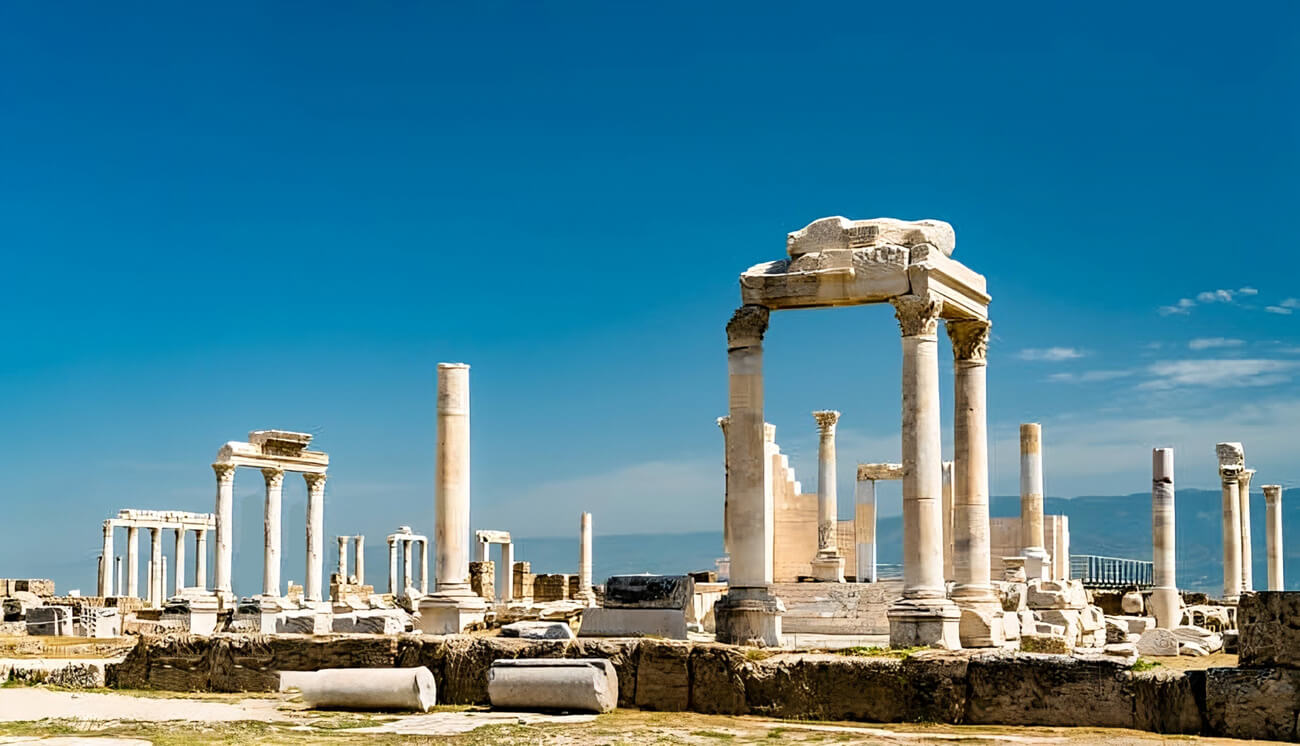
Excavation and restoration reveal streets, theaters, baths, temples, churches and an extensive water system. Mineral deposits inside pipes make the engineering visible.
The later churches demonstrate Laodicea’s continuing Christian importance; they are not the physical congregation addressed in Revelation.
The familiar explanation that hot water came from Hierapolis, cold water from Colossae and arrived lukewarm at Laodicea is suggestive but not secure in every detail. The city’s water system is relevant, yet the reconstruction should be presented as interpretation rather than settled fact.
Visiting today
Read the place without overstating it
Laodicea deserves a substantial visit because its scale and restored streets make the ancient city intelligible.
Pairing it with Hierapolis deepens the Lycus Valley context; adding Colossae requires honest expectations about an unexcavated mound.
Ancient city
Laodicea
Modern setting
Denizli region
Primary text
Revelation 3:14–22
Continue exploring