
Scripture
The letter and its recurring themes
The address in Revelation 3:1–6 speaks to a Christian community within Sardis. It is a letter to people, not a description of a surviving church building.
- A reputation for life set against spiritual death
- Wakefulness and unfinished works
- Remembering, keeping and repenting
- Names that will not be erased
Read the complete passage in context before building an interpretation from one phrase.
Historical setting
The city behind the address
Sardis was the capital of the Lydian kingdom and remained important under Persian, Hellenistic and Roman rule. Stories of the acropolis being taken after defenders failed to watch difficult approaches have often been connected with the letter’s warning.
That historical resonance can be useful, but it should not be presented as the only meaning of Revelation 3. The letter addresses the condition of a Christian community.
Archaeological evidence
What the remains can tell us
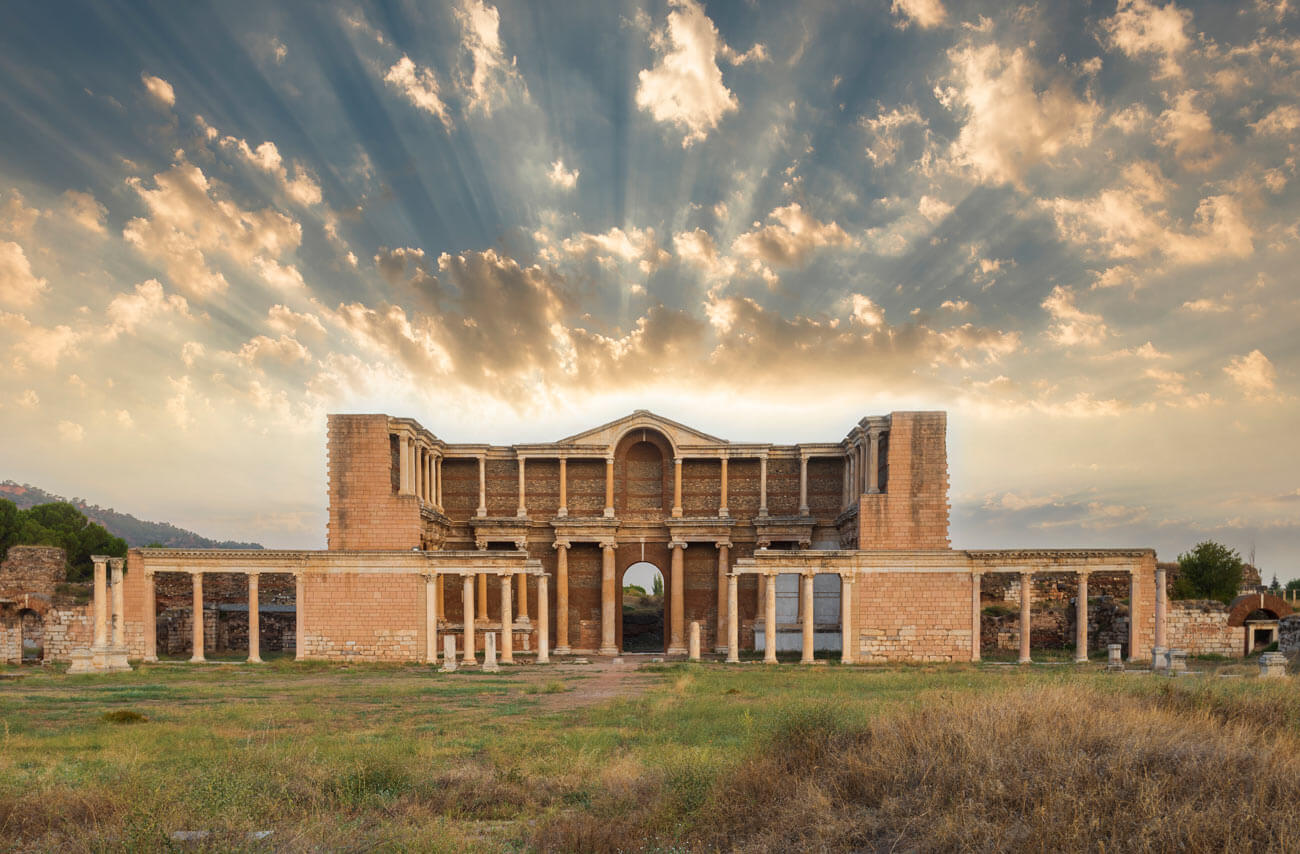
The site includes the Temple of Artemis, a Roman bath-gymnasium complex, shops, churches and one of the most significant excavated synagogues of the ancient diaspora.
These remains span centuries. The synagogue’s visible form is later than the Revelation letter, yet it reveals the city’s religious and social complexity.
The language of wakefulness resonates with Sardis’s remembered military history, but the text itself does not explicitly explain the metaphor by citing one capture of the acropolis.
Visiting today
Read the place without overstating it
Sardis requires time across more than one area; the temple and Roman center should not be collapsed into a single photo stop.
Shade is limited in parts of the site, and the walking plan should reflect season and mobility.
Ancient city
Sardis
Modern setting
Sart
Primary text
Revelation 3:1–6
Continue exploring