
Scripture
The letter and its recurring themes
The address in Revelation 2:8–11 speaks to a Christian community within Smyrna. It is a letter to people, not a description of a surviving church building.
- Affliction and poverty set beside spiritual richness
- Slander and social pressure
- Faithfulness even when suffering carries a cost
- The promise of the crown of life
Read the complete passage in context before building an interpretation from one phrase.
Historical setting
The city behind the address
Smyrna occupied a strong harbor position on the Aegean and cultivated civic identity, commerce and loyalty within the Roman imperial order. The city’s public life formed the everyday setting of the Christian community.
The letter’s language of suffering should not be turned into a claim that every local event can be reconstructed. It gives a pastoral address to named people in a real city, not a complete civic history.
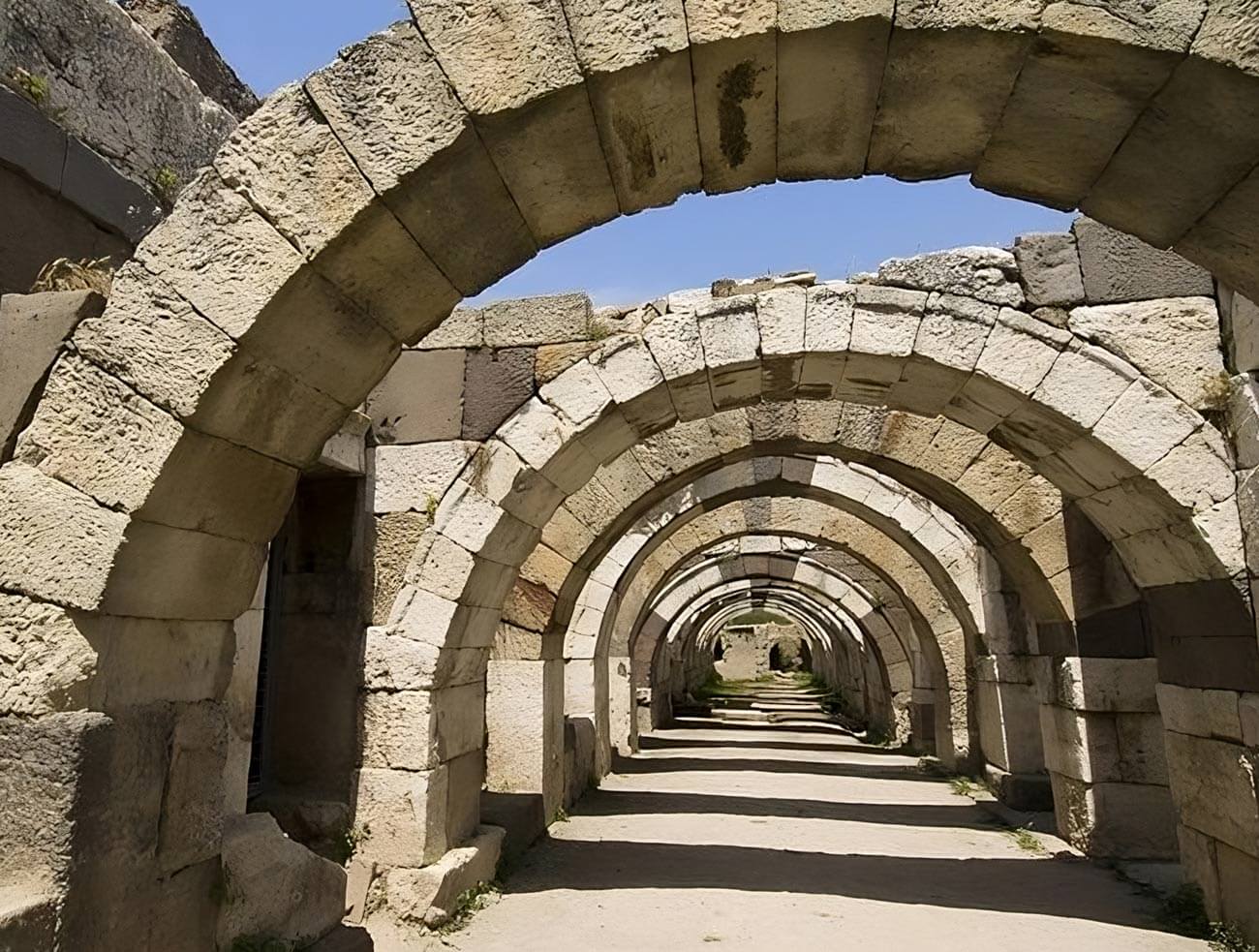
Archaeological evidence
What the remains can tell us
The agora preserves columns, vaulted substructures and evidence of the Roman city. Much of ancient Smyrna lies beneath modern İzmir, so the visit joins an archaeological site with a living metropolis.
Graffiti and inscriptions help scholars study the social world of the city, but archaeology cannot identify the meeting place of the congregation addressed in Revelation.
Polycarp belongs to Smyrna’s later early-Christian story. His martyrdom is important, but it should not be blended into the Revelation-era letter as though both texts describe the same moment.
Visiting today
Read the place without overstating it
The agora can usually be combined with arrival or departure through İzmir when flight timing permits.
A strong visit connects the visible Roman city, the letter and Polycarp while keeping their dates distinct.
Ancient city
Smyrna
Modern setting
İzmir
Primary text
Revelation 2:8–11
Continue exploring