
Scripture
The letter and its recurring themes
The address in Revelation 3:7–13 speaks to a Christian community within Philadelphia. It is a letter to people, not a description of a surviving church building.
- The open door
- Limited strength and faithful endurance
- A promised pillar in the temple of God
- A new name and lasting belonging
Read the complete passage in context before building an interpretation from one phrase.
Historical setting
The city behind the address
Philadelphia was founded in the Hellenistic period and occupied a route into inland Anatolia. Earthquakes repeatedly affected the region, and ancient writers describe ongoing instability after the major earthquake of AD 17.
The letter’s language of stability and becoming a pillar can be heard meaningfully in this setting, but the historical context should illuminate rather than dictate interpretation.
Archaeological evidence
What the remains can tell us
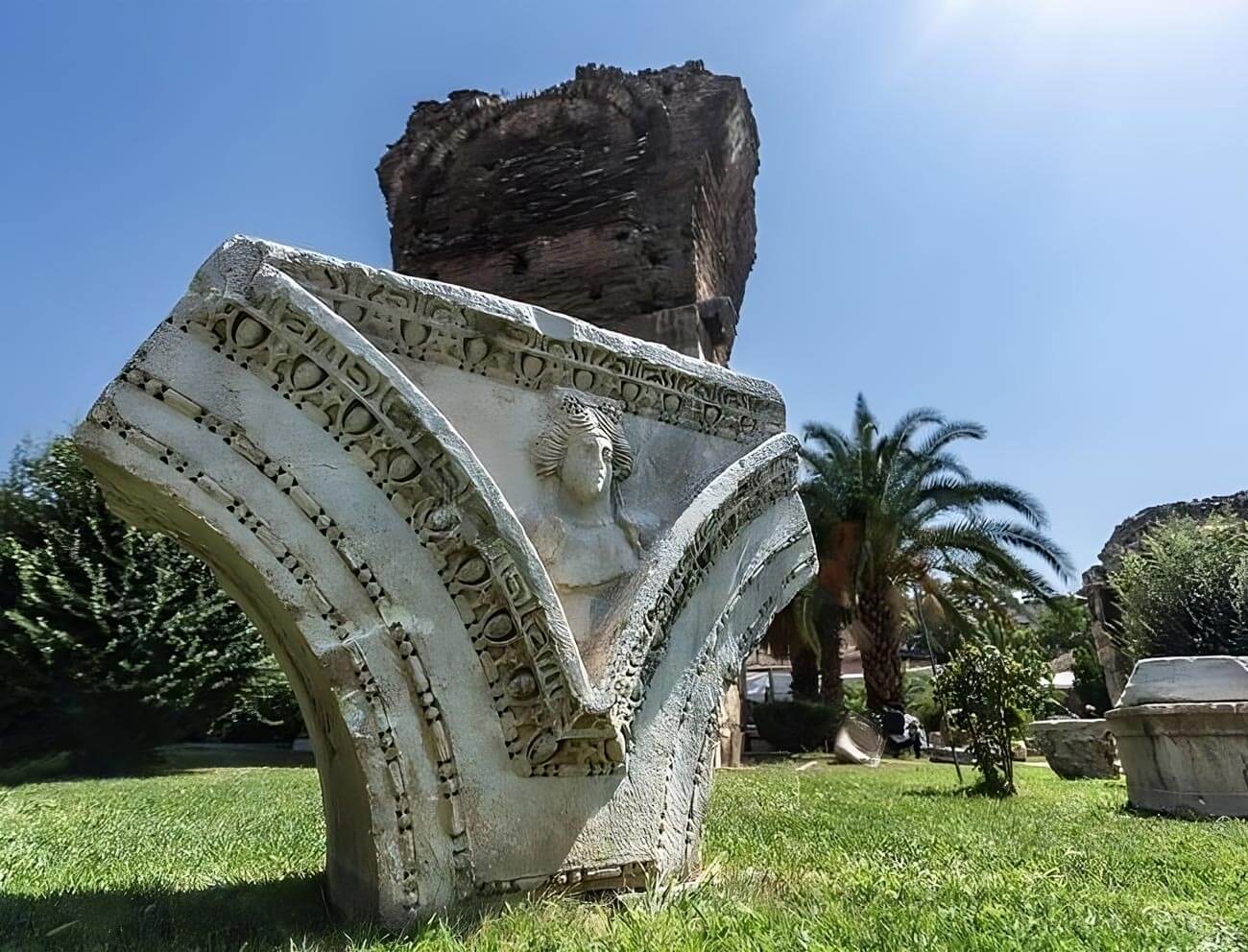
Much of the ancient city lies beneath modern Alaşehir. The most visible Christian remains are massive brick piers and arches from the later Church of St. John.
Their date matters: they cannot be labeled as the building used by the congregation addressed in Revelation.
Continuity of Christian presence and memory is historically significant, but later architecture must remain distinct from the Revelation-era community.
Visiting today
Read the place without overstating it
Philadelphia is a focused stop within a living town, not an expansive archaeological park.
The visit is strongest when it connects text, urban continuity and later memory with clear chronology.
Ancient city
Philadelphia
Modern setting
Alaşehir
Primary text
Revelation 3:7–13
Continue exploring