The monument
A major basilica above the later town of Ephesus
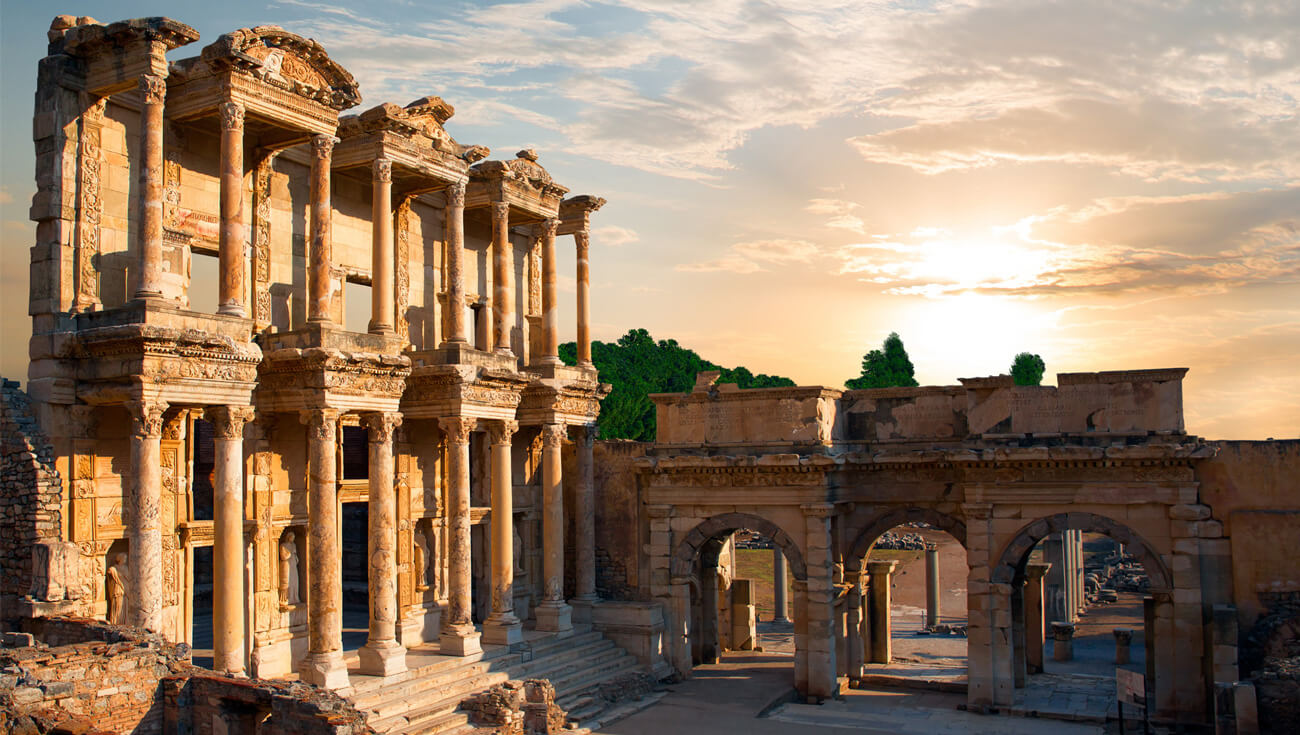
The principal surviving form belongs to the reign of Justinian. Its scale, domed plan and setting show the importance of the cult and memory of John in the Byzantine period.
The monument should be read within the changing settlement of Ephesus and Ayasuluk rather than treated as a first-century church building.
Tradition
Veneration is historically real even where biography is debated
Early Christian writers connect John with Asia and Ephesus; later generations located his tomb on this hill. The basilica is strong evidence for the endurance of that veneration.
It is not archaeological proof for every claim about authorship, identity or burial. Responsible interpretation says both things clearly.
Visiting
Pair the basilica with Ephesus without blending periods
A full day can place Roman Ephesus, the later basilica and—if requested—the House of the Virgin Mary into a chronological conversation. Each has a different evidentiary basis.
The visit involves open terrain and seasonal heat. Pacing and site order should reflect the group’s mobility and available time.
- Roman Ephesus
- Johannine tradition
- Byzantine pilgrimage
- Modern archaeological interpretation
Sources & further reading