Scripture
The letter to Ephesus
Revelation 2:1–7 addresses a community commended for hard work, perseverance and its testing of false apostles. Yet the message also contains a searching rebuke: the church has abandoned the love it had at first. It is called to remember, repent and recover its former practice.
Read in the city itself, the letter holds perseverance and love together. Orthodoxy, labor and endurance are praised—but they are not permitted to replace the community’s first devotion.
The image of the lampstand belongs to the symbolic world of Revelation. A responsible visit does not claim that a particular excavated object “proves” the text; it uses the city’s setting to ask historically informed questions of the passage.
History and archaeology
A major city of Roman Asia
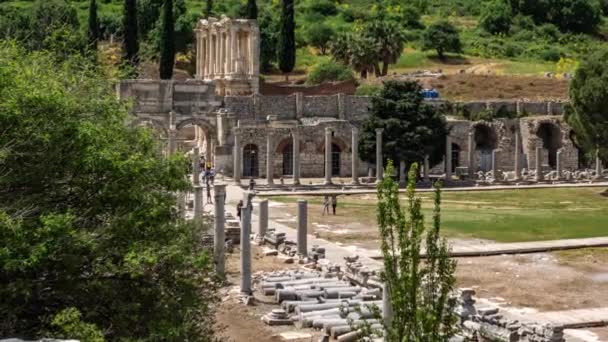
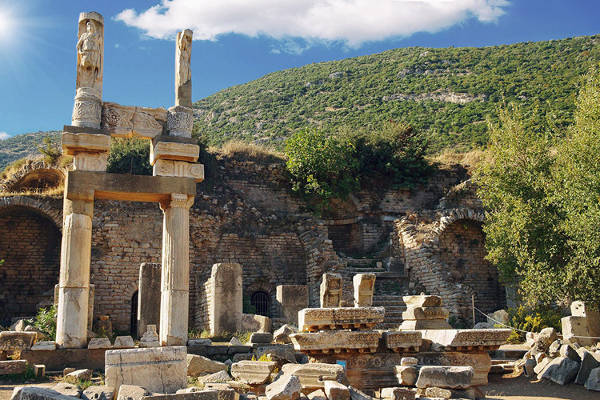
Under Roman rule, Ephesus became the capital of the province of Asia and one of the Mediterranean’s most important urban centers. Its harbor connected inland trade routes to the Aegean; its public buildings expressed civic identity, wealth and imperial power.
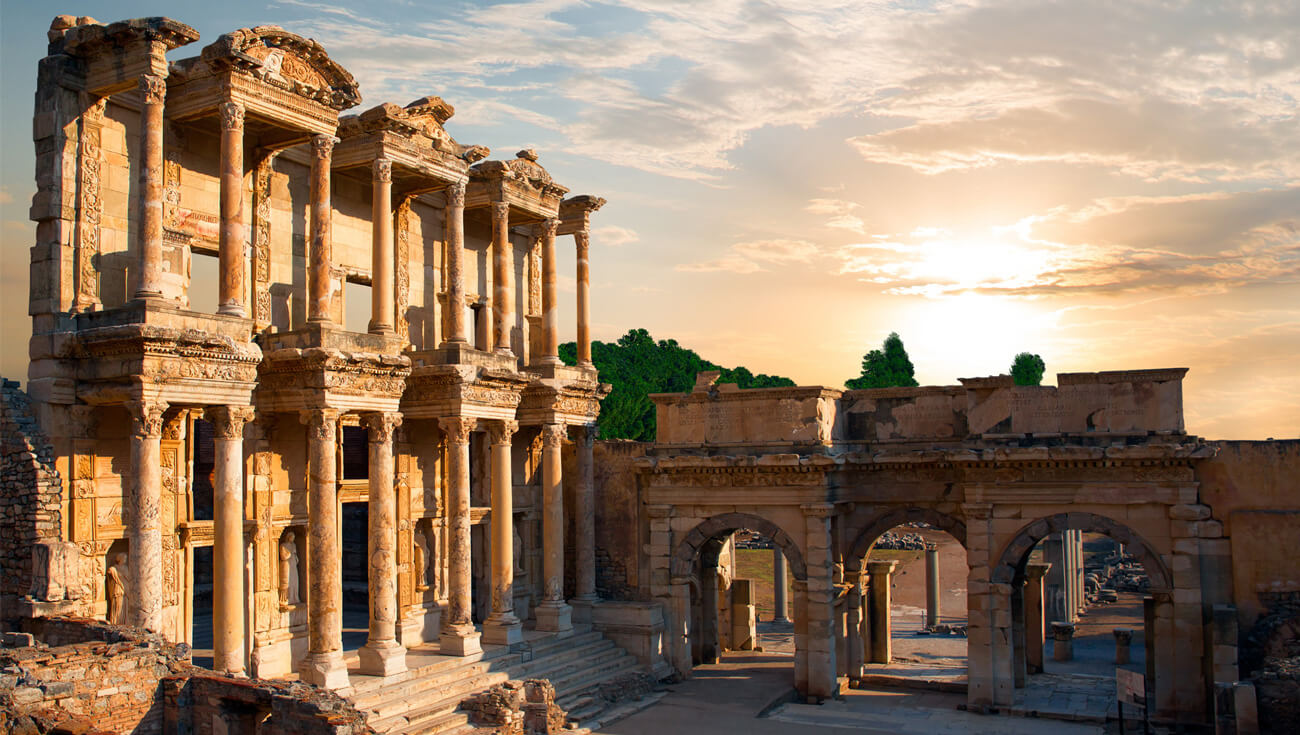
The Library of Celsus is one of Ephesus’s most recognizable monuments, but it dates to the early second century—after Paul’s Ephesian ministry. It is visually essential to the site, not evidence of an encounter Paul had there.
Acts and the Pauline world
Paul in Ephesus
Acts 18–20 places Paul in Ephesus for an extended ministry. Acts 19 describes teaching, healing, public controversy and a disturbance connected with artisans whose livelihood was tied to the cult of Artemis. Later, at Miletus, Paul addresses the Ephesian elders in an emotionally charged farewell.
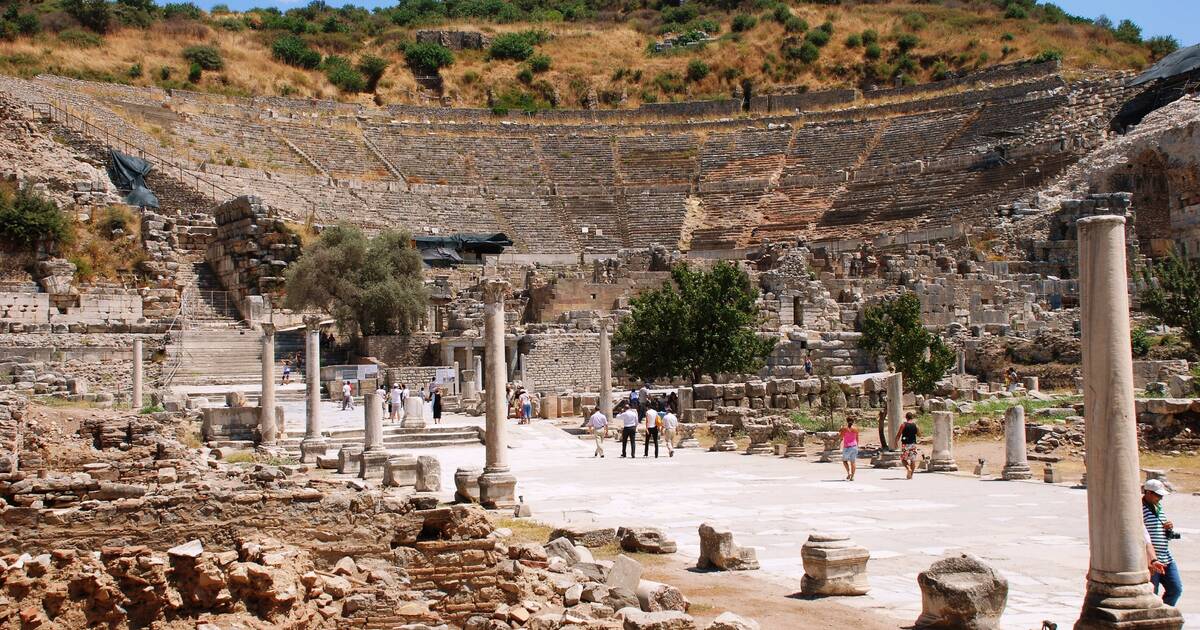
The theater—capable of holding a very large crowd—gives scale to Luke’s account of civic uproar. Yet archaeology does not identify where every conversation occurred. Good guiding uses the preserved city to illuminate social possibilities while remaining honest about the limits of reconstruction.
Explore Paul in TürkiyeEarly Christian tradition
John and the memory of Ephesus
Early Christian tradition strongly associates John with Ephesus, and the later Basilica of St. John at nearby Ayasuluk became a major center of pilgrimage. Tradition also connects Mary with the region. These associations are important to Christian memory, but they are not all established in the same way or with the same kind of evidence.
On our journeys, St. John’s Basilica is treated as a significant early Christian and Byzantine site in its own right. The House of the Virgin Mary may be included when a group wishes to engage its devotional tradition; it is described as tradition, not presented as an archaeologically proven residence.
How to read this page
Five lenses, kept visibly distinct.
Scripture
The primary text
Revelation 2:1–7 and Acts 18–20 establish the biblical frame.
Tradition
Received Christian memory
John’s association with Ephesus is ancient and influential, but labeled as tradition.
Archaeology
Material context
Streets, inscriptions and monuments reveal the city’s scale and public life.
Scholarship
Interpretive questions
Researchers debate dates, audiences and how particular images relate to local settings.
Guide reflection
Insight from the field
Standing in the landscape can sharpen questions; reflection is identified as reflection.
Planning the visit
How to experience Ephesus well
Allow real time
A thoughtful biblical visit should not be reduced to a photograph at the Library. The route, teaching stops and group mobility determine the time required.
Plan for the terrain
Ancient marble can be uneven and slippery. Summer heat, shade, entrances and vehicle access all affect the day’s design.
Connect the wider landscape
St. John’s Basilica, Miletus and the other six churches deepen the story when time and group purpose allow.
Selected sources and further reading
Where this overview begins
- UNESCO World Heritage Centre — EphesusSite history, outstanding universal value and archaeological context.
- Austrian Archaeological Institute — History of EphesusResearch history and the long-term excavation project.
- Biblical passages: Revelation 2; Acts 19–20Primary texts cited in this overview.
Prepared by the Seven Churches Tour editorial team. Last reviewed September 2026. No external scholarly review is claimed. Corrections: operation@gezginol.com.